

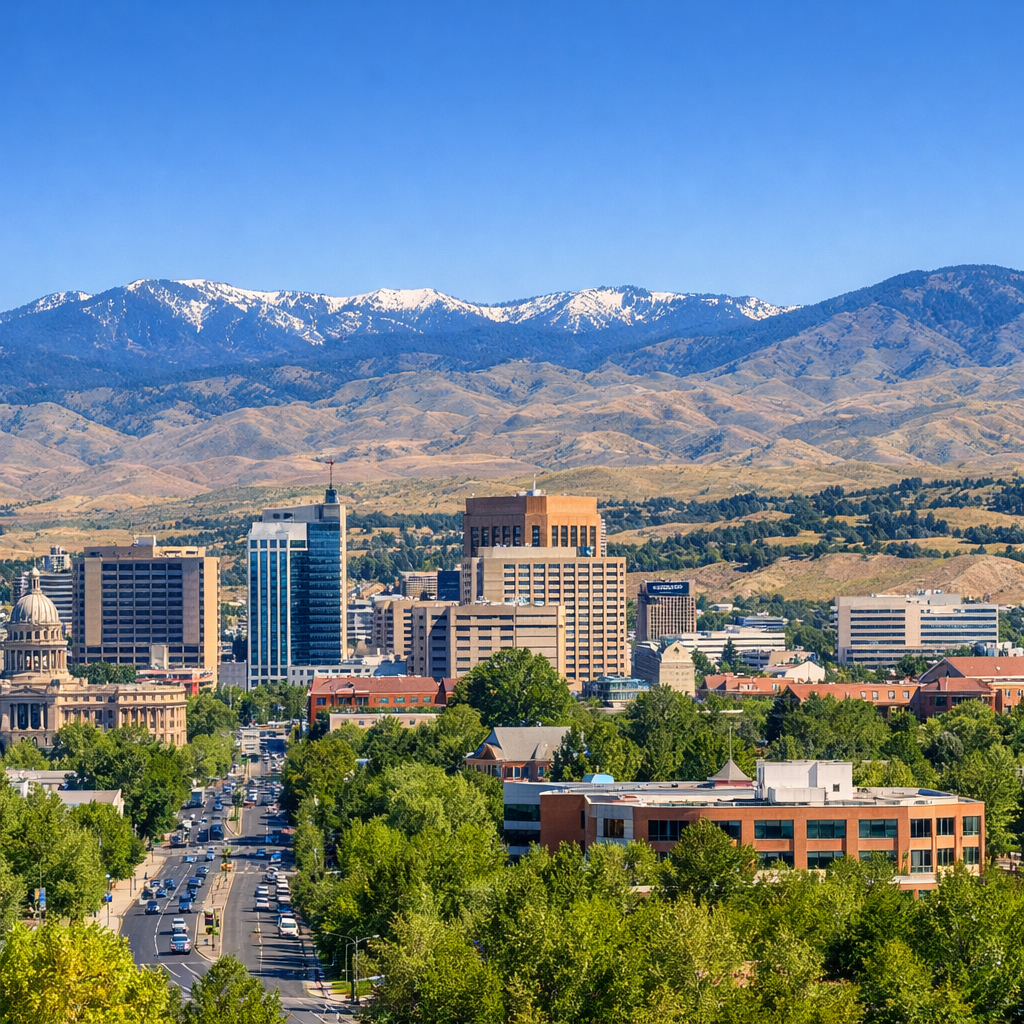
Boise, Idaho, experiences a semi-arid climate characterized by four distinct seasons, each offering unique weather patterns and opportunities for residents and visitors alike.
Summer: Hot and Dry
Summers in Boise are typically hot and dry, with average high temperatures reaching the 80s and low 90s in June, July, and August. Occasional days can climb near or above 100 degrees Fahrenheit. Despite the heat, low humidity levels and abundant sunshine make the warmth more comfortable. Evening temperatures often drop into the 50s and 60s, providing cooler nights. Rainfall during summer is minimal, especially in July and August.
Winter: Cold with Moderate Snowfall
Winters are cool to cold but generally milder than many northern inland cities, with average highs in the 30s and 40s and lows in the 20s. Snowfall averages around 15–20 inches per year, and long stretches of sub-freezing temperatures are uncommon.
Spring and Fall: Mild Transitions
Spring and fall serve as transitional periods with mild and pleasant temperatures. Spring brings blooming flora and gradually warming temperatures, while fall is marked by vibrant foliage and a gradual cooling trend. These seasons are ideal for outdoor activities, offering comfortable weather and scenic beauty.
Geographical Influences
Boise’s location within the Treasure Valley, near the foothills of the Rockies and the Owyhee Mountains, significantly influences its climate. The surrounding mountains can lead to temperature inversions, particularly in winter, where cold air is trapped in the valley, leading to colder temperatures and potential air quality issues.
Understanding Boise’s seasonal climate patterns can help residents and visitors plan activities and prepare for the varying weather conditions throughout the year.