

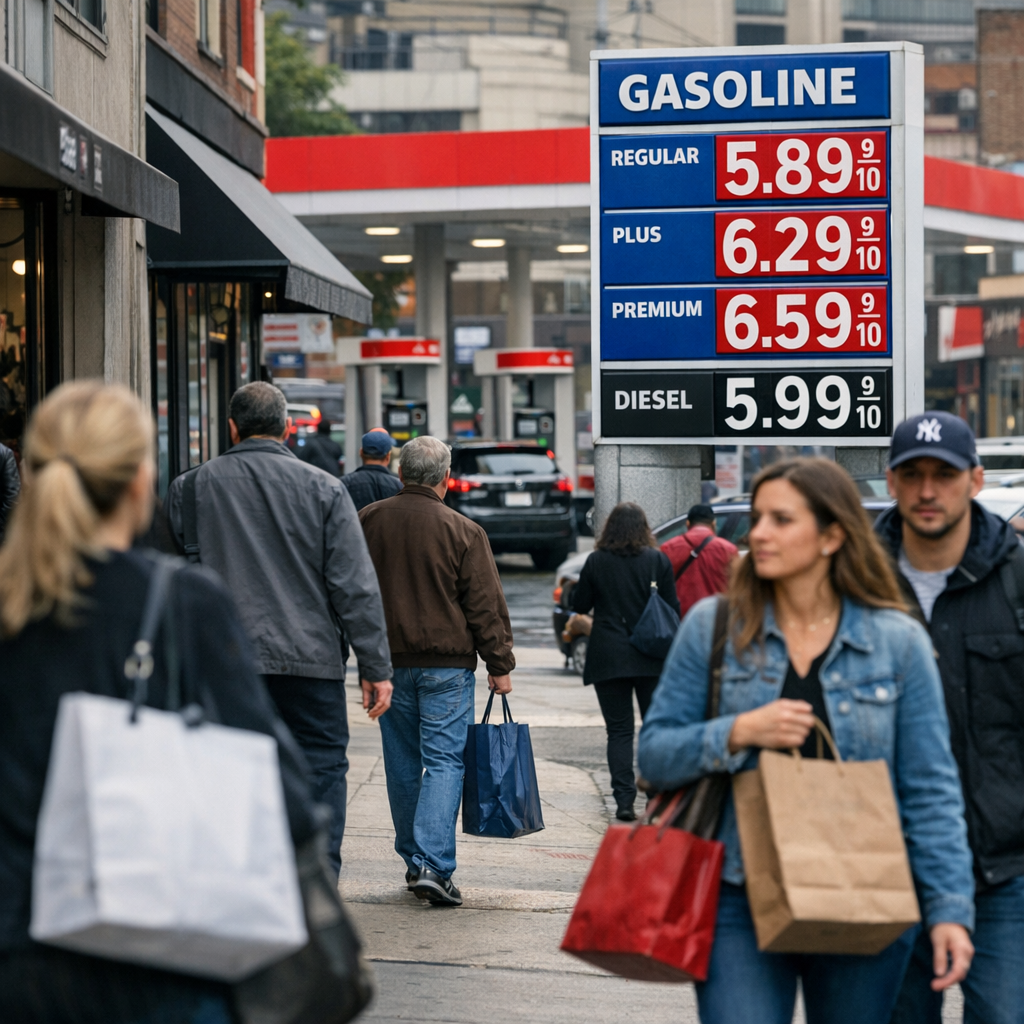
The United States economy is currently experiencing a complex interplay of factors affecting inflation, employment, and consumer confidence. Understanding these elements is crucial for both policymakers and the general public.
Inflation Trends
Inflation has been a significant concern, with recent data indicating a rise to 3.8% in April. This increase is largely attributed to ongoing geopolitical tensions, particularly the conflict in the Middle East, which has disrupted energy markets and trade routes. As a result, gas prices have surged above $4.50 per gallon, impacting household budgets nationwide. [Source: Axios]
Employment and Wage Dynamics
Despite a strong GDP growth driven by advancements in artificial intelligence, the labor market presents mixed signals. For the first time in three years, wage growth has fallen behind inflation, diminishing real purchasing power for many Americans. Additionally, consumer sentiment has declined to record lows, reflecting growing pessimism about the economy and personal financial futures. [Source: Axios]
Political Implications
The economic challenges have significant political ramifications. A recent CNN poll indicates that 70% of Americans disapprove of the current administration’s handling of the economy. This dissatisfaction is influencing upcoming midterm elections, with polling showing Democrats leading significantly on a generic House ballot. [Source: Axios]
Looking Ahead
Addressing these economic issues requires a multifaceted approach, including stabilizing energy markets, implementing effective fiscal policies, and restoring consumer confidence. As the situation evolves, staying informed and engaged is essential for navigating the complexities of the current economic landscape.