

By Logan Bryant
Four Distinct Seasons and What They Mean for Boise
Boise features a cool semi-arid climate, typical of many high-desert regions. We get hot, dry summers and winters that are relatively mild, though snow and cold certainly show up now and then. Daily temperature swings — cool nights, hot days — happen frequently, especially during summer, due to low humidity and elevation. Average highs in July tend to hover in the low 90s°F, while average winter lows in December and January often dip into the 20s°F. March through May brings the windiest stretch, and fall tends to be the calmest.
Precipitation, Snow, and Winter Inversions
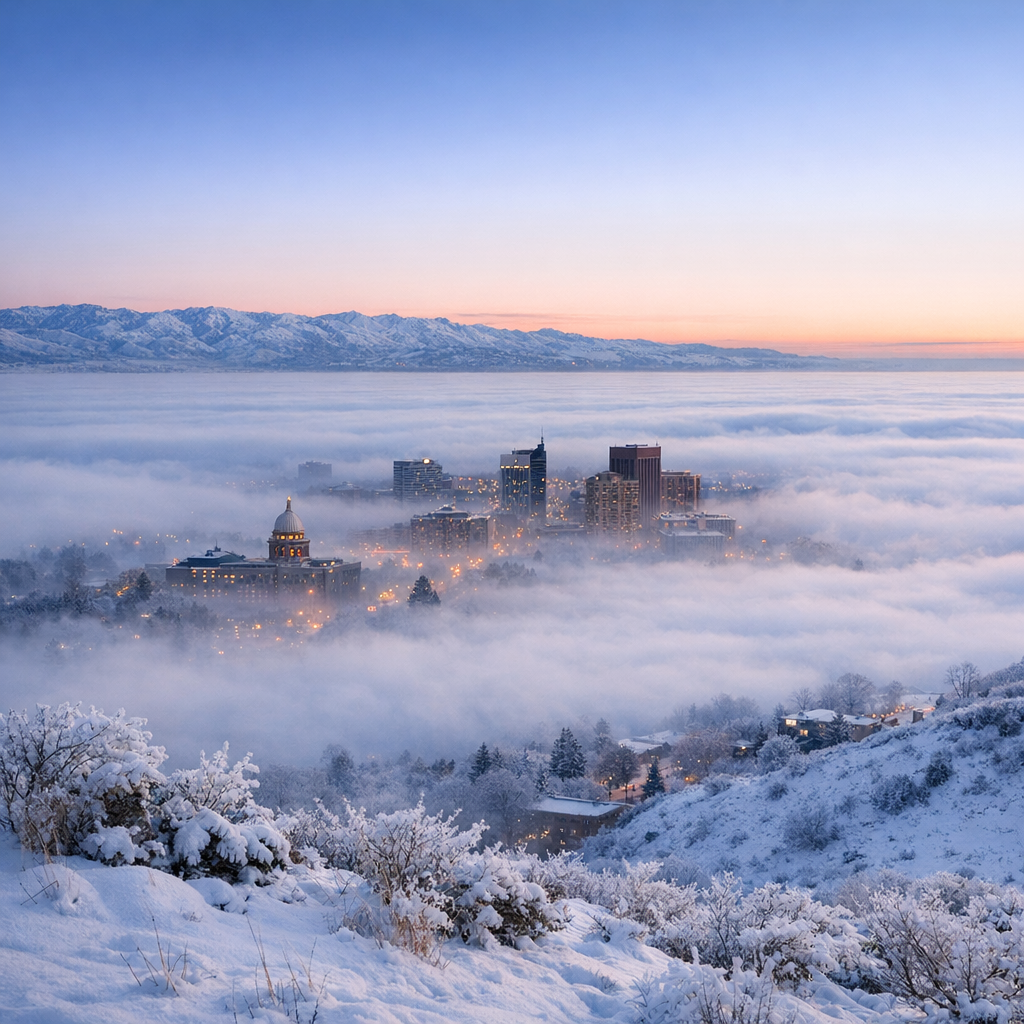
About three-quarters of Boise’s yearly precipitation falls between November and May. Snow tends to be light and patchy in the valley — average annual snowfall is under two feet — though the surrounding mountains get much more. When snow covers the ground in the city, it can trigger temperature inversions. These inversions trap cold air and pollutants near the surface, leading to fog, stagnation, and sometimes icy roads.
Air Quality: Challenges and Health Concerns
Each winter, Boise (and the wider Treasure Valley) is vulnerable to very poor air quality. Inversions trap smoke from wood stoves and fireplaces, as well as exhaust, under low clouds and fog. In southern summers, wildfire smoke and ozone add to the threat. A recent study showed Boise ranking among the more polluted metro areas nationwide for ozone smog and short-term particle pollution. Children, outdoor workers, and those with respiratory conditions are especially affected.
Drought: More Than Just a Dry Summer
Drought in our region doesn’t begin when summer arrives—it starts if winter and spring precipitation are weak. Reduced snowpack affects spring and summer water flow, lowers reservoirs, and tightens water supplies for agriculture, ecosystems and urban use. Boise has recorded stretches with no measurable precipitation for several weeks, and dry summers following dry winters amplify the risks.
What Can Residents Do?
- Monitor air quality alerts and limit outdoor activity when particle levels or ozone are high.
- Reduce emissions in winter by using cleaner heating methods and minimizing wood smoke.
- Use water wisely—mulch gardens, choose drought-tolerant plants, and be aware of watering restrictions.
- Support policies and planning for clean air, robust water infrastructure, and wildfire prevention.
Knowing how the seasons, climate, and environment interact here in Boise can help all of us better weather the challenges ahead—and enjoy the many blessings our region has to offer.