

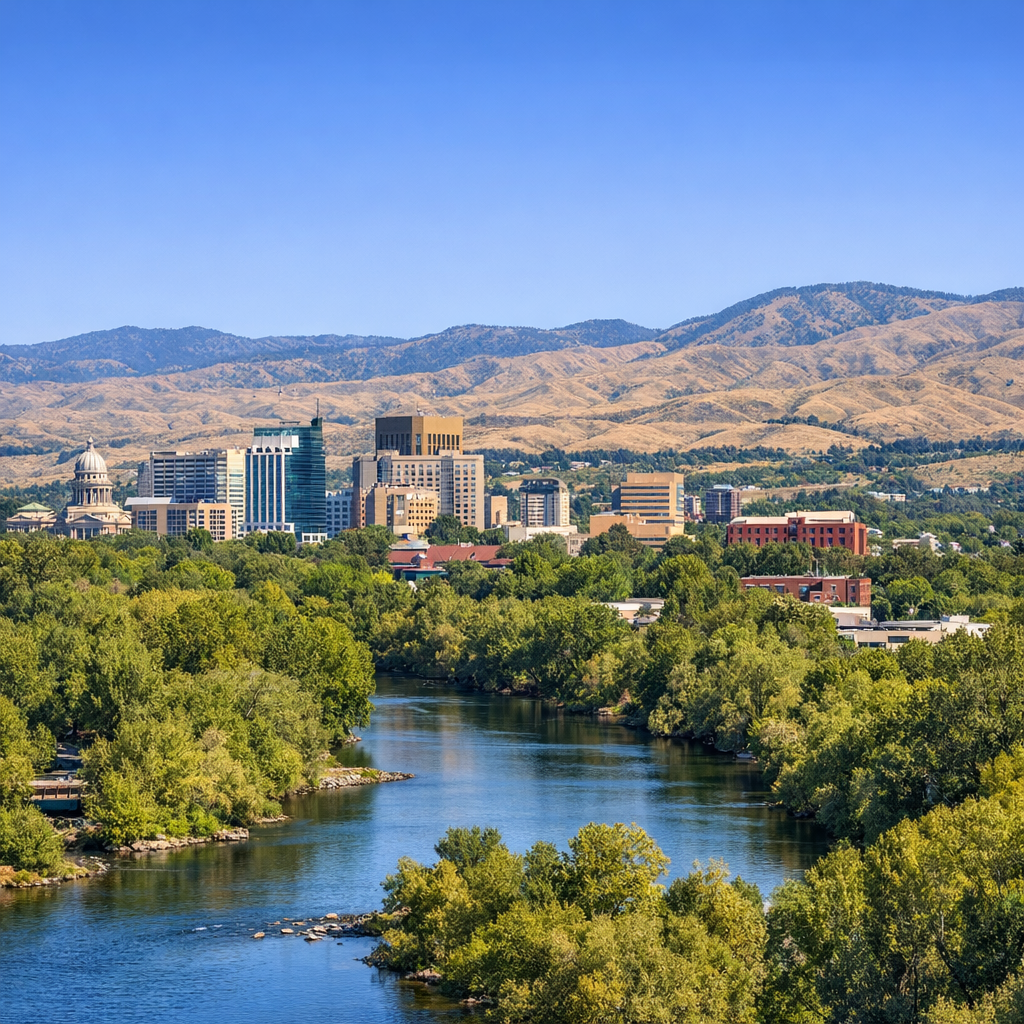
Boise, Idaho, offers residents and visitors a unique climate characterized by four distinct seasons, each bringing its own set of weather patterns and environmental conditions. Understanding these seasonal variations is essential for planning activities and appreciating the natural beauty of the region.
Spring: A Season of Renewal
Spring in Boise typically spans from March through May, with temperatures gradually warming from the mid-50s°F (13°C) in March to the low 70s°F (22°C) by May. This season is marked by increasing daylight hours and blooming flora, making it an ideal time for outdoor activities. Rainfall is moderate, contributing to the lush landscapes that define the area during these months.
Summer: Hot and Dry
Summers, from June through August, are characterized by hot and dry conditions. Average high temperatures in July peak around 92°F (33°C), with minimal rainfall. The arid climate results in low humidity levels, and the city enjoys over 200 days of sunshine annually. However, the lack of precipitation and high temperatures can elevate the risk of wildfires, necessitating caution during outdoor activities.
Autumn: Mild and Colorful
Autumn, spanning September through November, brings cooler temperatures and vibrant fall foliage. Highs in September average around 80°F (27°C), gradually decreasing to the mid-50s°F (13°C) by November. This season offers comfortable weather for hiking and exploring the surrounding foothills, with the changing leaves providing a picturesque backdrop.
Winter: Mild with Occasional Snow
Winters in Boise, from December through February, are relatively mild compared to other regions at similar latitudes. Average high temperatures hover around 38°F (3°C) in December and January, with lows dipping to approximately 25°F (-4°C). Snowfall averages around 20 inches (51 cm) annually, often melting quickly due to the city’s moderate temperatures. The surrounding mountains, however, receive abundant snowfall, offering opportunities for winter sports enthusiasts.
Climate Change Impacts
In recent decades, Boise has experienced noticeable changes in its climate. Since the 1970s, the city has warmed by approximately 4.5°F (2.5°C), making it one of the fastest-warming metropolitan areas in the United States. This warming trend has led to more frequent extreme heat days and an extended wildfire season, posing challenges to both the environment and public health.
To address these challenges, the City of Boise has implemented initiatives such as the Elaine Clegg City of Trees Challenge, aiming to plant 100,000 urban trees to mitigate urban heat and improve air quality. Additionally, the city’s Climate Action Roadmap outlines strategies to reduce greenhouse gas emissions and enhance community resilience to climate change.
Understanding Boise’s climate and the ongoing changes is crucial for residents and visitors alike. By staying informed and participating in local environmental initiatives, the community can work together to preserve the natural beauty and livability of the region for future generations.